.png)
HEALTH & ALTITUDE ADVISORY
Please travel mindfully, with care for both people and place. Visiting the Biennale sites is undertaken at your own risk, particularly given the high-altitude environment.
Acclimatisation is essential, not optional. Please spend at least 48 hours in Leh before travelling to higher elevations, and consult your doctor before your journey if you have any pre-existing or ongoing medical conditions.
.png)


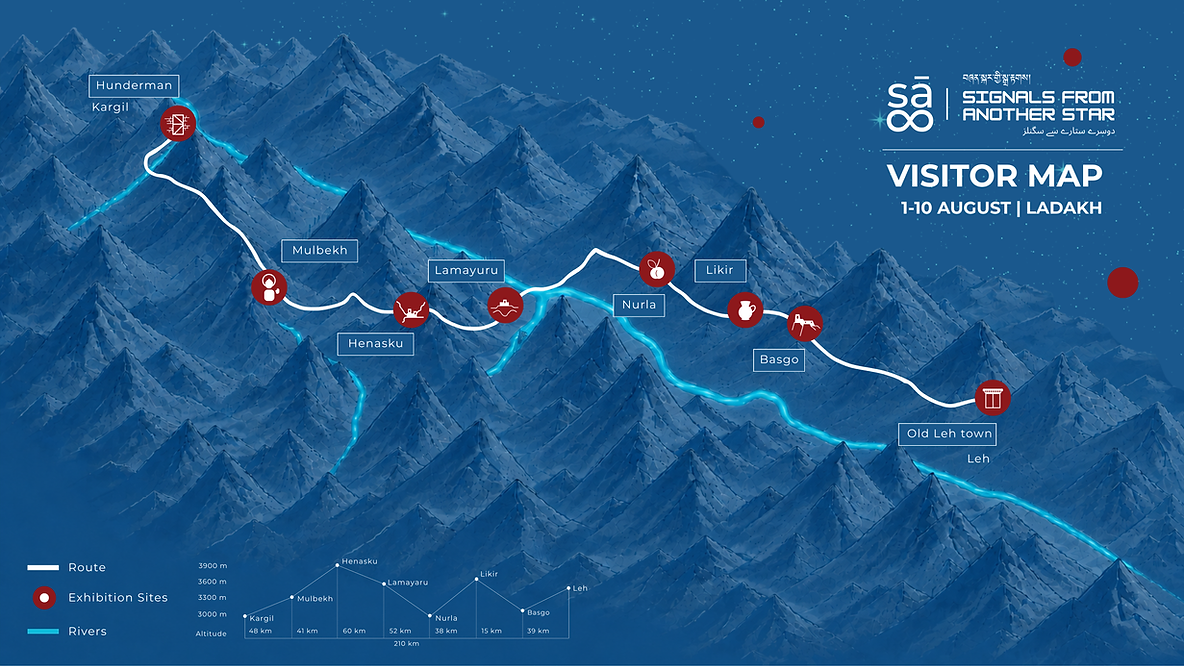
Click the icons to know more.
GUIDE FOR VISITORS
Ecosystem
Ladakh is a fragile high-altitude ecosystem (around 3600m). Visitors are encouraged to travel slowly and respectfully, keeping in mind the local culture, environment, and limited natural resources.
Flights
The nearest airport is Kushok Bakula Rimpochee Airport. Regular flights operate from cities like Delhi, Mumbai, Jammu, Chandigarh and Srinagar. Due to weather and altitude, delays or cancellations are common, plan buffer time.

Greetings
Use local greetings to build warmth: Julley (hello / thank you / bye), Salam Aleikum (hello), Shukriya (thank you) and Khuda Hafiz (bye).
Health and Acclimatization

Due to the high altitude, rest during the first 24–48 hours, stay hydrated, and avoid heavy physical activity initially.
Road Routes
Ladakh is accessible via three main road routes: the Manali–Leh Highway, the Srinagar–Leh Highway, and the Padum–Leh route via the Shinku La Pass. These routes are seasonal (generally open between May and October, subject to weather and road conditions) and require careful acclimatisation.
Local Transport
Transport options include shared taxis, private cabs, rental bikes, and public buses. Shared taxis are an affordable way to travel between villages. For bus services, visit: https://sidco.maryul.com/. For remote and high-altitude routes, we recommend travelling with experienced local drivers.
Clothing
Weather in Ladakh can change quickly. Carry warm layers, a good jacket, and comfortable sturdy shoes.
Wind Protection
Carry a mask or scarf to protect yourself from strong winds and dust.
Skin Protection
Due to the dry climate and strong high-altitude sun exposure, use moisturizers or natural oils such as local apricot oil. Apply a high SPF sunscreen. Wearing sunglasses, a hat, or a scarf is highly recommended to protect against UV rays and prevent sunburn.
Rain Protections
Carry a raincoat and preferably an umbrella in case of sudden weather changes.

Women's Health
and Hygiene
Women visitors are encouraged to carry personal hygiene products and dispose of them responsibly, especially in remote locations. Reach out to team in case of help.
Water Use
Water is scarce in Ladakh. Please use water carefully and mindfully. Carry a resuable water bottle.
Protecting Nature
Do not collect stones, flowers, or plants. Avoid disturbing wildlife and stay on established paths.
Environmental Responsibility
Single-use plastic is banned in Ladakh. Please carry a reusable water bottle and dispose of all waste responsibly.
Food and
Drinking Water
Prefer freshly prepared local meals and drink boiled or filtered water.
Respectful
Adreess
Elders can be respectfully addressed as Ache (elder sister) or Kaka / Ka (elder man). You may also add Ly after a name as a respectful suffix (for example: Stanzin Ly)

Photography
Always ask permission before taking photographs of people, homes, or farms. In villages, photography should preferably be done with the consent and guidance of a sā Ladakh team member. Avoid photographing children without guardian permission.
Entering Homes
and Villages
Always ask before entering houses, gardens, or private areas. Respect the privacy and hospitality of local residents.
_edited.png)
Monasteries and Sacred Sites
Dress modestly, remove shoes when required, and avoid touching religious objects such as statues, books, or ritual items. Maintain silence and respect during prayers.
Mosques
Dress respectfully, remove shoes and cover head before entering prayer areas. Ask permission before taking photographs.

Support
Local Economy
Choose local food, crafts, stays, and products to directly support the community
Smoking and
Drinking
Smoking and drinking alcohol in public village spaces are prohibited.

Interacting with Children
Be gentle and respectful, give children space, speak at their eye level, and engage kindly without being intrusive.

Coordinate with
Community Operators
Engage respectfully with taxi drivers, guides, waiters, and local workers; communicate with patience and fairness.

Noise Awareness
Avoid loud noise, unnecessary honking, loud music, respect local communities, wildlife, and shared spaces.

Avoid Open
Defecation
Use designated toilets, including dry toilets where applicable, dispose of waste responsibly, and seek guidance from locals when needed.

Phone Connectivity
Only postpaid SIMs work reliably in Ladakh; check network compatibility beforehand.

Being a Responsible Guest
Travel with humility, patience, and respect. Ladakh is not only a landscape but a living home for many communities.

Indian citizens can apply for permits online via https://www.lahdclehpermit.in/register-as-domestic. International visitors are requested to coordinate with their travel agent for permit assistance.
Experiencing sā Responsibly
sā welcomes local and international audiences through an approach that is globally connected and locally grounded. Visitors, whether travelling independently or in groups, are encouraged to engage with care, respecting landscapes, communities, local rhythms and the ecological sensitivities of Ladakh.
The invitation is not only to consume art or landscape, but to spend time with it, live alongside it, and create meaningful memories through attentive encounter with place, people, climate and culture. Mindful participation, responsible travel and respect for shared environments help ensure that engagement leaves care behind rather than unintended pressure on fragile ecologies and social contexts.
This integrates your ideas of glocality, anti-consumption, living with art, memory-making, responsible groups, and honouring landscape without becoming too heavy or policy-like.